Culture isn't built by title. Here's why this framework is for anyone shaping how a team feels, whether or not they have the word 'leader' on their business card.

Before you shut down the idea of requesting this free resource, let's clear up one assumption: this is not just a tool for managers.
It's for anyone whose behavior shapes whether the people around them feel safe enough to do their best work. Sometimes that's a manager. Often it isn't.
Three Groups, One Job
Leaders of teams. This might be the most obvious audience. If people report to you, every habit on that handout is already showing up in how your one-on-ones go, how you hand out recognition, and how much of a head's-up you give before something changes.
Leaders of organizations. The habits scale up, not down. A CEO who makes real decisions behind closed doors and then announces them to "everyone else" is crushing certainty and fairness at the same time — just at a size that might be much larger than a team.
Individual contributors with quiet leadership. This is the group most frameworks like this forget, and it's the one I want to spend the rest of this post on.
Title and Leadership Are Not the Same Thing
We all know at least one person with "manager" or "director" on their door who has never once made a room feel safer to be in. On the flip side, we know at least one person with no formal authority who somehow becomes the person a team turns to when something's wrong — the one whose opinion moves a decision, the one new hires get pointed toward in their first week because "if you want to know what's really going on, ask them."
That second person is leading. Nobody put it on their business card, and the org chart doesn't reflect it, but the influence is real — and often it does more to shape a team's culture than anything coming from the person with the title.
Titles get assigned. Leadership gets earned, one habit at a time, in front of other people, whether or not anyone is tracking it on a performance review.
That cuts both ways. A title doesn't protect you from crushing status when you take credit that wasn't yours. And the absence of one doesn't stop you from building certainty when you're the person who tells a teammate what you know, instead of letting them sit in the dark.
Why This Matters for How You Use the Rest of This Series
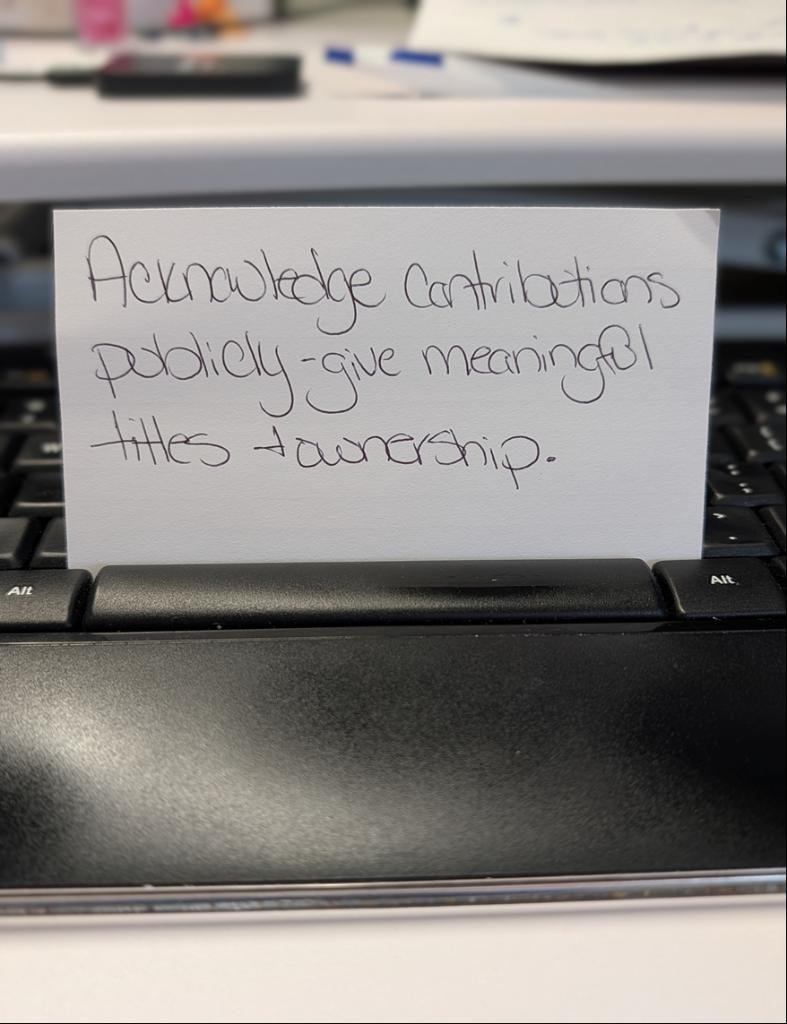
If you've been waiting to feel "official enough" to start rating yourself against these five builders, you don't need to wait. I'll go deeper into the note card method in my next post, and it will work exactly the same whether you manage 1,200 people, 12, or zero.
The habit of showing up as a person, giving credit out loud, explaining the why behind a hard call — none of that requires a leadership title. It just requires you to decide to do it, consistently, in the rooms you're already in.
Wherever you sit on the org chart, the question underneath this whole framework is the same one: are the people around you catching safety from how you show up, or are they catching something else? That question doesn't check your title before it asks.
Haven't grabbed the resource yet? Download the Top 5 Culture Builders vs. Culture Crushers on the Free Resources page — it's the starting point for everything in this series.
Explore Topics
Written by
Stephanie Hammond
Content creator and writer sharing insights and stories.